Roof rat activity in Osceola County concentrates heavily along elevated architectural lines where live oaks, Spanish moss, and palm fronds touch fascia boards. In communities like Celebration and Crescent Lakes, barrel…
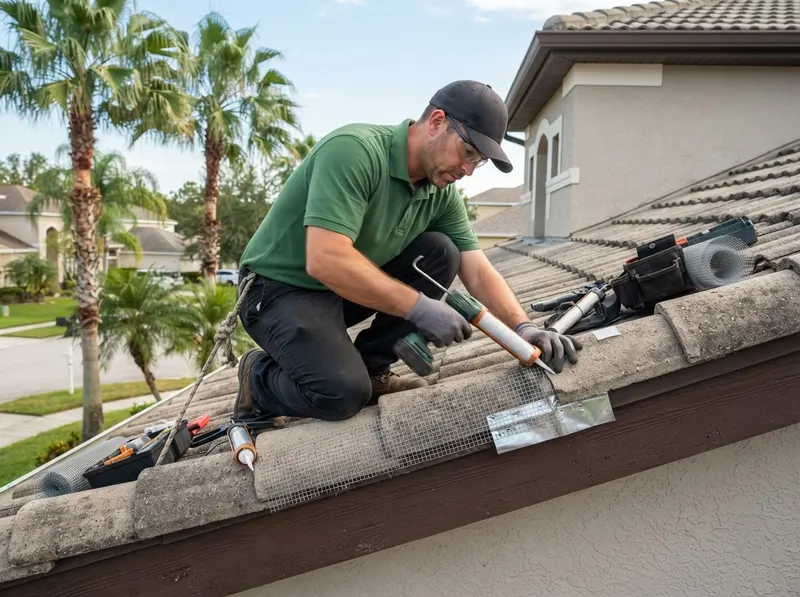
Roof rat activity in Osceola County concentrates heavily along elevated architectural lines where live oaks, Spanish moss, and palm fronds touch fascia boards. In communities like Celebration and Crescent Lakes, barrel tile roof valleys and open soffit junctions provide primary runways for Rattus rattus seeking dry refuge above damp subtropical soil. In Bellalago and neighborhoods near Lake Tohopekaliga, dense waterside vegetation supports continuous outdoor rodent pressure. Trapping alone fails to resolve these invasions because outdoor populations replenish captured rodents within weeks if construction gaps remain open. Physical exclusion paired with mechanical trapping establishes an impenetrable envelope, halting the gnawing of electrical wires, drywall damage, and attic duct degradation.
Exclusion focuses on closing all gaps larger than 0.25 inches using weather-resistant materials designed to withstand Florida's heat and 50-plus inches of annual rainfall. Metal flashing, galvanized 23-gauge steel mesh, and industrial elastomeric sealants secure ridge caps, plumbing stacks, AC chase lines, and eave gaps. Expanding foam alone is not utilized for primary exclusion, as rodents chew through standard polyurethane foam within 48 hours. For property managers operating vacation rentals in Indian Ridge or Mill Run, mechanical trapping inside attic spaces avoids secondary odor problems. Rodenticides placed loosely in attics create severe decomposition odor hazards inside walls when animals succumb in inaccessible voids, a scenario that shuts down short-term guest operations.
Implementation follows a strict procedural sequence to ensure complete population clearance before sealing work is certified. Step 1: Technicians conduct a 360-degree perimeter roofline inspection from gutters to ridge vents to map every thermal break and rub mark. Step 2: High-tension snap traps baited with non-perishable attractants are placed along attic trusses and known interior travel runways. Step 3: Critical exterior ingress points are sealed with steel mesh and structural fasteners, leaving controlled one-way exit zones if needed. Step 4: Technicians monitor and reset trap arrays every 24 to 72 hours until zero activity is recorded across 3 consecutive checks. Step 5: Attic spaces receive non-toxic microbial treatments to neutralize pheromone trails that attract surrounding rodent colonies.
Every job gets a firm, written price after a free on-site visit.
Tell us about your roof rat exclusion & trapping job in Kissimmee and we'll send a clear, written quote, usually the same day.
 Whitetail Pest Control